
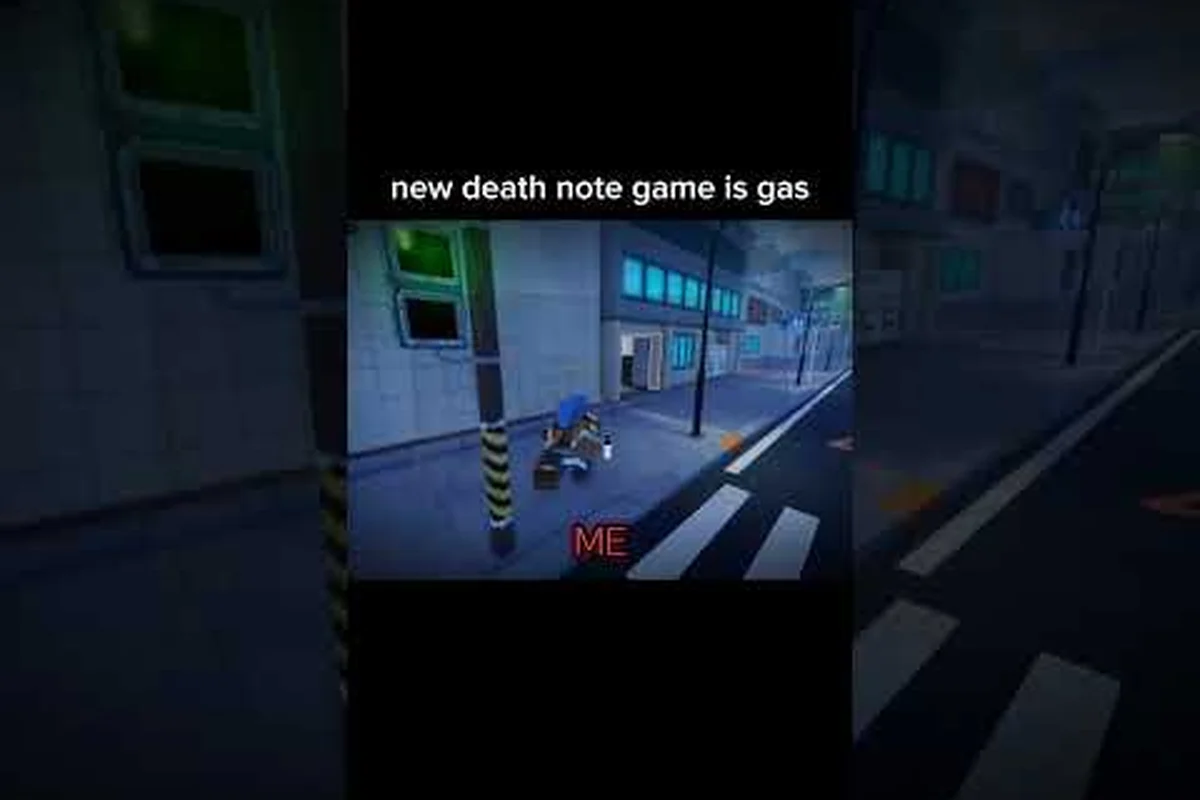
BloxNote secret areas hide a surprising amount of content for a social deduction map still officially labeled v0.1 on the Roblox page. The city block, the apartment tower, and the high school wing each contain tucked-away rooms, broken windows, and reference props that reward players who explore instead of rushing the first objective. Knowing where those spots sit on the city map turns a 13-player round into a controllable information war instead of a chaotic chase.
What Makes BloxNote's Map Worth Exploring
BloxNote runs as a Survival / 1 vs All social deduction game published by the group fearless horror games, with a current player pool of roughly 1,431 concurrent users and about 320,340 total visits on the official BloxNote Roblox page. Those numbers matter for secret-area hunters because every corridor, rooftop, and side alley is designed to be revisited across a 13-player server. The same hidden window that hides a Kira Follower during round two becomes a peek-spot for an Investigator in round four.
The core map is a compact Japanese city block inspired by the Death Note anime premise, and the structure mirrors the genre template described in the Death Note: Killer Within Wikipedia article: a small killer side hides among investigators who complete objectives. BloxNote takes that template and layers it over a small but dense city, so the hidden rooms change tactical value depending on which role you draw.
| Map Region | Approx. Area Coverage | Primary Use | Secret Spot Density |
|---|---|---|---|
| City streets | 35% | Chases, ambushes, meeting hall exits | Medium |
| Apartment tower | 25% | Kira Follower hideouts, objective rooms | High |
| School wing | 20% | Investigator task hubs, upload points | Medium |
| Rooftop and skylines | 10% | Sniping, Shinigami eye vantage | High |
| Underground / service corridors | 10% | Emergency escape, bugged task zones | Very high |
The map is small enough that one full lap on foot takes about 90 seconds, but the rooftop layers and underground service tunnels stretch the vertical play space well beyond what a flat floor plan suggests. That ratio is why the building map rewards elevation control more than raw sprinting, and why a BloxNote city map run without checking sight lines usually ends in a free kill for the opposing side.
The Core BloxNote Map Overview
The map is split into four overlapping zones that bleed into each other through doorways, alleys, and one-way skylights. Investigators spawn near the school, while the Kira side spawns inside the apartment tower, and both sides can reach the central plaza within the first ten seconds of a round.
City Streets and Central Plaza
The central plaza is the highest-traffic tile on the entire BloxNote city map. The fountain in the middle is decorative, but the four corner shops around it each contain a hidden corner that a skilled player can use to break line of sight without triggering a task event. Two of those corners are reachable only by hugging the wall during a chase, which is why a BloxNote map overview for new players always starts with the fountain.
| Plaza Corner | Hidden Mechanic | Best Used By |
|---|---|---|
| Northeast ramen shop | One-way breakable window | Kira Follower escape |
| Southwest convenience store | Stockroom loop | Investigator regroup |
| Southeast bookstore | Drop-down ceiling vent | Kira mid-round reposition |
| Northwest laundromat | Side door to service tunnel | Emergency objective dump |
Apartment Tower and Building Map Layers
The apartment tower carries the densest building map content because three of the four upper floors contain at least one room that does not appear on the loading screen minimap. Floors two through four mirror each other in layout, but the hidden rooms alternate sides, so a memorized path on floor three will not work on floor four. The roof is reachable through the stairwell, a fire escape, or a service ladder tucked behind the vending machine on the second floor.
A common BloxNote map secret that players report is the unmarked door on the third floor that opens into a small studio apartment. From inside, you can see the hallway through a one-way window, which is a textbook ambush angle for a Kira Follower waiting to confirm a name. Investigators rarely check the third-floor side rooms because the task tracker only marks floors one and four, so the room stays contested across most rounds.
School Wing and Outdoor Courtyard
The school wing is the cleanest zone on the map and the easiest place for an Investigator to chain tasks. The classrooms are open, the hallways are wide, and the courtyard outside the gym has a clear view of the apartment tower entrance. That visibility is exactly why the easter egg content is concentrated on the back side of the building, where most players only look when a task forces them to.
Rooftops and Service Corridors
The rooftop system is the single largest piece of vertical real estate on the BloxNote city map, and the corridors below it are the smallest. Both layers are where the BloxNote map size feels bigger than it is, because a player who knows the roof can skip the streets entirely and cut chase timers in half.
BloxNote Map Size, Scale, and Vertical Play
The map is small in raw square footage, but the 13-player server cap combined with vertical layers means the effective play space is closer to a medium-sized social deduction board. According to community testing reported by players on YouTube clips, a full sprint from the school spawn to the apartment roof takes around 22 to 26 seconds, depending on which side path you take.
| Map Layer | Approx. Footprint | Avg. Crossing Time | Sightline Risk |
|---|---|---|---|
| Ground streets | 100% | 18 seconds | High |
| School interior | 45% | 12 seconds | Low |
| Apartment tower floors | 60% | 14 seconds | Medium |
| Rooftop network | 30% | 10 seconds | Very high |
| Underground service tunnels | 25% | 16 seconds | Low |
That crossing-time data is why a BloxNote building map guide always prioritizes vertical routes for Kira side play. The streets are loud, predictable, and visible from the roof, while the service tunnels and upper floors give quieter movement and clearer ambush opportunities. The trade-off is that a noisy rooftop runner is the easiest target on the entire map because every nearby window points at the same line.
If you want a more granular layout of the rooftops and the named callouts that Investigators use, the BloxNote map guide breaks the city into named segments and pairs them with the standard callout vocabulary used by the player base.
BloxNote Easter Eggs and Reference Content
Easter eggs in BloxNote lean heavily on the Death Note source material, and the developers have hidden several visual references that only make sense if you already know the anime. Players familiar with the franchise will spot the apple on the rooftop railing, the stacked newspapers near the school entrance, and the L-shaped silhouette decals in the back stairwell of the apartment tower.
| Easter Egg | Location | Reference | Verified By |
|---|---|---|---|
| Shinigami apple | Rooftop railing, north corner | Ryuk's preferred snack | Community clips |
| L silhouette | Apartment back stairwell, floor 2 | Detective L's posture | Player screenshots |
| Stacked newspapers | School front gate | Death Note news coverage | Community clips |
| Graffiti chalk names | Hidden classroom 3-B | Names written in the notebook | Player reports |
| Scattered notebook pages | Central plaza, behind fountain | The Death Note itself | Player reports |
The chalk names inside classroom 3-B are a particularly subtle BloxNote easter egg because the room is only accessible through a vent that opens from the courtyard, and the writing changes between server resets. Players who compare screenshots have confirmed that the names sometimes reference real Death Note characters and sometimes reference the developer's group members, which means the room is alive in a way most static decorations on a Roblox map are not.
The character side of the lore lives in a different guide. If you want the full breakdown of how each BloxNote role maps to its anime counterpart, the characters vs anime guide covers the Kira, Kira Follower, L, and Investigator assignments in detail.
Secret Tactical Spots Most Players Miss
Beyond the named easter eggs, there are several generic BloxNote map secrets that do not carry lore weight but completely change round flow once you know them. These spots work across both roles, and they are the difference between a player who reads the city map and a player who actually plays it.
| Secret Spot | Role That Benefits | Why It Works |
|---|---|---|
| Third-floor studio window | Kira Follower | One-way sightline onto hallway task players |
| Courtyard vent into 3-B | Investigator | Bypasses a contested chokepoint |
| Service tunnel under laundromat | Either side | Emergency reposition, task dump point |
| Rooftop vending machine ladder | Kira side | Quiet entrance to the roof, no street noise |
| School gym back balcony | Investigator | Overwatch on the central plaza |
The rooftop vending machine ladder is one of the cleanest BloxNote easter eggs in the practical sense, because most players assume the roof is only reachable through the apartment stairwell. The ladder is a free entry point, and the sound it makes is quieter than a stairwell footstep, which means a Kira Follower can reach the high ground without alerting the investigator currently scanning the plaza.
The laundromat tunnel is the other standout because it intersects the underground service corridor that runs under roughly 40% of the city map footprint. That tunnel is also where several task bug reports originate, so a player who knows the task bug report routes can use the same underground path to skip the broken mini-games that occasionally freeze the round.
Lobby Easter Eggs and Pre-Round Content
The lobby is technically not part of the active BloxNote city map, but it carries the densest cluster of hidden content in the game because players spend a longer total time there across a session. The chess boards, vending machines, and back wall each contain something that does not affect gameplay but rewards players who pay attention while waiting for the next round.
The chess board area in particular has been a hotbed of community discussion because the pieces reset between rounds in patterns that some players believe hint at upcoming map changes. Whether or not that is true, the chess boards are the single best way to learn the names of the lobby's hidden callouts, and the chess boards in the lobby guide maps each piece position to the spawn room it points toward. Once you have those callouts memorized, the early seconds of a round become a navigation advantage instead of a coin flip.
| Lobby Spot | Hidden Content | Player Use |
|---|---|---|
| Chess board center | Resetting piece patterns | Callout memorization |
| Back wall vending row | Out-of-order machine behind the group | Photo spot, no tactical use |
| Ceiling vent above spawn | Visible from the upstairs catwalk | Confirms the lobby map size |
| Front desk chalkboard | Player names from the last round | Cosmetic only |
| Stairwell to catwalk | One-way door | Bypasses the lobby crowd |
Putting the Secret Areas Together
Once you stack the easter eggs, the hidden rooms, and the tactical spots, the BloxNote city map becomes a layered puzzle instead of a flat floor plan. The streets are the surface, the apartment tower is the contested middle, the school is the safe anchor, and the rooftop plus underground layers are the vertical chess board that decides most late-round outcomes.
The key is to treat every BloxNote secret area as a role-specific tool rather than a generic collectible. The third-floor studio window only matters if you are playing a Kira Follower who needs an ambush angle. The service tunnel only matters if you are an Investigator who needs an emergency task dump. The rooftop ladder only matters if you understand which sightline it gives you over the plaza.
That role-based reading of the building map is also why the BloxNote map size keeps surprising new players. The surface footprint is small, but the vertical and underground layers multiply the effective play space by a factor of two or three once you learn the entry points. Treat each hidden spot as a tool tied to your current role, and the v0.1 city map stops feeling like a cramped social deduction board and starts feeling like a sandbox.
Frequently Asked Questions
How big is the BloxNote map?
The ground footprint of the BloxNote city map is compact, with a full lap taking roughly 90 seconds on foot. Once you include the apartment tower floors, the rooftop network, and the underground service tunnels, the effective play space roughly doubles because of the vertical layers.
Where are the best BloxNote secret areas for ambushes?
The third-floor studio apartment in the apartment tower and the rooftop vending machine ladder are the two strongest ambush positions. The studio gives a one-way window onto the hallway task route, and the ladder gives quiet access to the high ground over the central plaza.
Are BloxNote easter eggs tied to the Death Note anime?
Yes, most of the easter eggs reference Death Note lore. The apple on the rooftop railing references Ryuk, the L-shaped silhouette in the back stairwell references Detective L, and the chalk names in hidden classroom 3-B sometimes reference characters from the original series.
Do the secret rooms change between server resets?
The chalk names inside hidden classroom 3-B reportedly change between server resets, while the room layout itself stays static. The chess boards in the lobby also reset their piece patterns, which some players believe hints at upcoming map changes.
Can the underground service tunnel be used for tasks?
Yes, the tunnel intersects several task routes and is often used as an emergency dump point when the surface is contested. It is also where some of the known task bugs originate, so a player who knows the underground layout can route around frozen mini-games instead of waiting them out.