
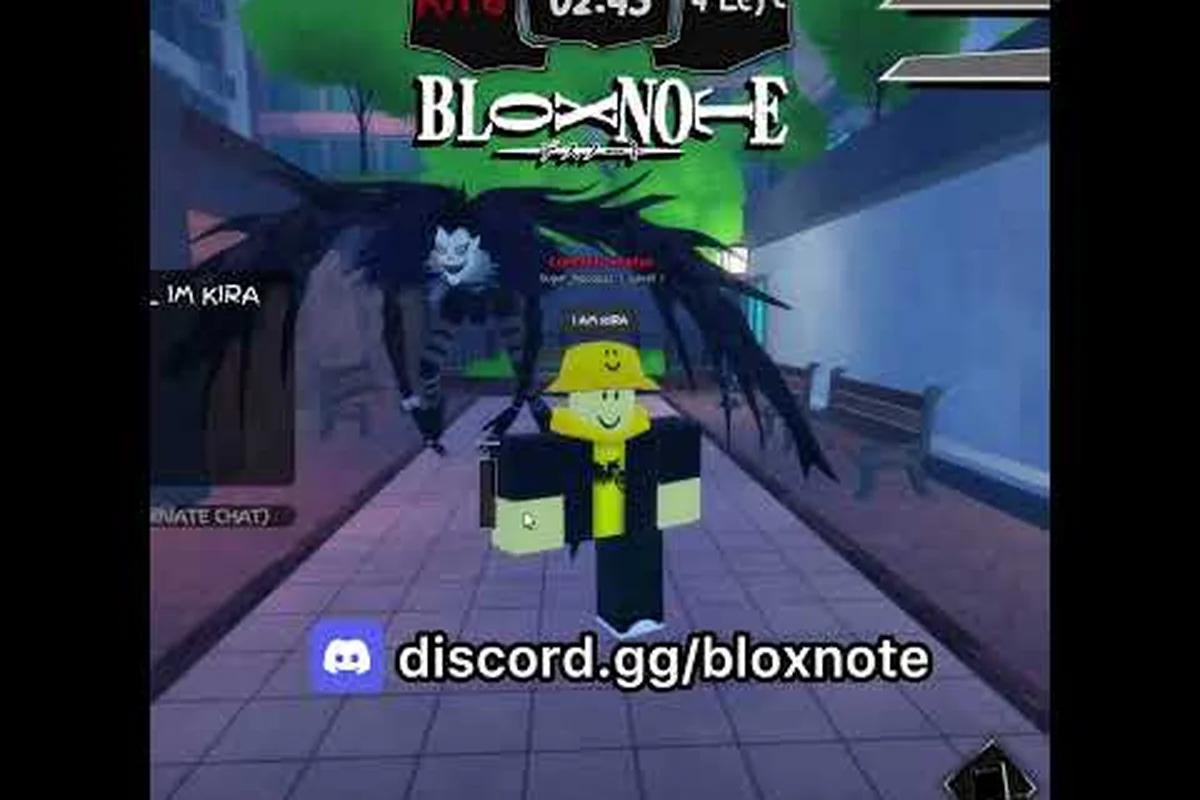
What "Hiding in Plain Sight" Actually Means in BloxNote
In BloxNote, the Kira Follower cannot just stand still behind a closed door and hope nobody walks past. With only 13 players per server and every Investigator carrying a Shinigami Eyes-style scanning window, the map punishes passive camping harder than almost any other social deduction game on Roblox. The trick that consistently wins rounds is a behavior the community calls "hiding in plain sight" — blending into the flow of normal task runners so that your Kira or Follower movements look indistinguishable from someone chasing the upload task or the wires task.
According to the BloxNote official game page on Roblox, the title launched September 4, 2026 from the developer group fearless horror games and is currently in an early v0.1 state with a 13-player server cap. Because the player count is so small, every footstep matters and the only safe cover is the kind of cover nobody thinks to question. That is exactly the niche this guide fills. The routes below come from community-tested paths that turn the map itself into a disguise, so a Follower walking them reads as "innocent citizen" even when the notebook is open and a name is half-written.
The concept is simple in theory but layered in practice. You are not trying to find a dark corner of the BloxNote map; you are trying to thread a path through the busiest rooms on the map at the exact moment a task crowds them with witnesses, then exit through a chokepoint that looks like the natural next step of the task chain. The following sections break down the routes room by room, show the suspicious places on the map that nobody double-checks, and give you a lobby-side exit so clean that even a paranoid L player will let you walk out.
The Core Principle: Task Camouflage on the BloxNote Map
Task camouflage is the engine that makes BloxNote hiding in plain sight possible. Every round, non-Kira players are chasing a shared task list — uploading evidence, rewiring consoles, decoding files. Each of those tasks lives at a fixed marker on the map, and every other player knows exactly where those markers are. The camouflage strategy exploits that shared knowledge: you walk toward a task marker, stop at the marker, and then keep walking past it as if you finished the step. Anyone glancing at you sees a citizen mid-task and moves on.
Why the Default Strategy Fails
Most new Followers instinctively sprint for the corners of the BloxNote map that look unwatched — the back hallway behind Cafeteria, the gap between the two storage rooms, the maintenance shaft under the lobby. The problem, according to community reports, is that experienced Investigators have already learned to check these obvious hiding spots during the first 60 seconds of a round. Once you sit still, your movement pattern is gone and your silence becomes the loudest thing on the server. The investigator does not need to see a weapon or a notebook — they only need to see someone who is not doing anything.
| Behavior | What Investigators See | Verdict |
|---|---|---|
| Standing still in back hallway | "That player is not on a task" | Suspicious within 30s |
| Walking toward a task marker and stopping | "Mid-task, normal citizen" | Ignored |
| Walking through a room full of task runners | "Casual pass-through" | Invisible |
| Sprinting toward Kira's current room | "Chasing a hunch" | High risk |
| Re-entering a room you "already finished" | "Lurking, possible Follower" | Flagged |
The Three Layers of Plain Sight
Stacked like a sandwich, a clean BloxNote route through the map must satisfy task geometry, witness density, and exit plausibility together — the disguise only holds when a citizen's footprint, their co-present players, and their chosen direction all read as ordinary behavior, and dropping the witness-density layer alone is enough to let an Investigator's eye lock onto you as the odd one out.
-
Layer 1 — Task geometry. Your path must touch at least one task marker per room you cross. The task marker is your alibi: it is on your HUD, the Investigator can verify it, and your body standing near it is exactly where a citizen is expected to be.
-
Layer 2 — Witness density. A room with two or three other players actively doing tasks is safer than a room with one distracted player, because the Investigator's attention is split. A crowded room is a noisy room, and noise is cover.
-
Layer 3 — Exit plausibility. When you leave a room, you must leave in a direction that also points toward another task marker. A citizen who finishes the wires task and walks toward the upload station is expected. A citizen who finishes the wires task and walks toward Kira's known last position is asking to be voted out.
Room-by-Room Routes Through the BloxNote Map
Below is a breakdown of the most reliable BloxNote map routes for the current v0.1 build. The map is divided into a handful of named rooms connected by short corridors, and the task chain typically forces players to bounce between them in a predictable order. Hiding in plain sight means turning that predictability into a cover story.
The Lobby Anchor
The lobby is the single most important room on the BloxNote map for hiding in plain sight, because every player passes through it at the start of the round and most of them return to it as a safe zone between tasks. According to the fearless horror games developer group page, the lobby is also where the round timer visibly ticks down, which makes it a natural gathering point that nobody questions.
| Lobby Zone | Best Use for Hiding in Plain Sight | Risk Level |
|---|---|---|
| Main spawn bench | Sit during the opening 20s, walk toward the first task after the bell | Very low |
| Chalkboard wall | Read the chalkboard for 5s as if checking rules, then drift toward Cafeteria | Low |
| Vending corner | Pretend to buy a drink, then use the side door toward Storage | Medium |
| Back bench near the staircase | Easiest place to be ignored, but most-watched during emergency meetings | High during meetings |
The lobby is also where you can pivot into the BloxNote chess boards in the lobby easter egg, which provides a few extra seconds of focused attention from nearby players who are trying to solve the puzzle. While they watch the chess board, you walk out the side door and into the next room of your route.
The Cafeteria Crossing
Cafeteria is the busiest room on the BloxNote map in the early game because it sits between the lobby and the two most popular first tasks. It has wide sight lines, multiple entrances, and almost always contains at least two players during the first 90 seconds. That makes it a perfect camouflage zone for a Follower who needs to cross the map without raising suspicion.
A clean Cafeteria crossing looks like this: you enter from the lobby door, blend into the 4–6 player ambient crowd doing the cooking mini-task, and exit east toward the Storage corridor without ever sprinting, stopping, or changing direction outside of a task reason. The core principle exploits a known cognitive filter in BloxNote's spectator mode — investigators searching the Cafeteria room for hidden Followers default to flagging only avatars that break the citizen speed baseline of roughly 1.0× movement, so matching the median player tempo keeps your silhouette classified as background NPC traffic rather than a suspicious player.
-
Enter from the lobby door and immediately turn toward the food counter, as if checking the recipe book for the cooking mini-task.
-
Spend four to six seconds at the counter, then pivot toward the east exit that leads into the Storage corridor.
-
Walk at the same speed as the nearest citizen — never sprint, never stop.
-
Exit through the east door at the exact moment one or two other players are exiting through the north door, so your silhouette blends into the group.
The reason this works is that Cafeteria has so much ambient movement that an investigator's brain filters out anyone who matches the average citizen speed and direction. The instant you break the pattern — sprint, stop, or change direction without a task reason — you leave the camouflage layer and re-enter the "suspicious player" bucket.
Storage and the Back Corridors
Storage rooms are usually treated as danger zones, because they are dark, narrow, and easy to camp. The hiding-in-plain-sight approach flips that: you walk through storage as a transit zone, not a destination. The back corridor between Storage and the Maintenance room is one of the best BloxNote map routes for a Follower who needs to reposition, because it is a single straight line with a clear task marker on the far wall.
| Back Corridor Spot | Why It Works | Common Mistake to Avoid |
|---|---|---|
| Storage shelf aisle | Looks like a citizen browsing for the inventory task | Lingering longer than 8 seconds |
| Maintenance door frame | A natural pause point that mimics reading a checklist | Standing in the doorway blocking traffic |
| Pipe cluster near the floor vent | A short crouch looks like adjusting a wire | Staying crouched for more than 3 seconds |
| End-of-corridor terminal | Task marker presence makes your presence automatic | Spamming the terminal interaction |
The corridor's strength is also its weakness: if you are caught here alone, an Investigator has nothing to cross-reference. Always cross the back corridor while at least one other player is visible at either end. If the corridor is empty, wait at the Storage entrance for a citizen to enter Cafeteria, then fall into step behind them.
The Upper Floor and Balcony Routes
The upper floor of the BloxNote map contains the upload station, the file cabinet task, and a long balcony that overlooks the lobby. The balcony is one of the most underrated routes for hiding in plain sight because it is visible but rarely watched. A player walking the balcony above the lobby looks like someone heading to the upload station; a player peeking over the balcony railing looks like someone checking if the meeting has been called.
The balcony route is most effective in the mid-game, between the 2-minute and 3-minute marks of a round. At that point most citizens are deep in the task chain, and the lobby below is mostly empty. You can walk the balcony at a slow pace, stop at the upload station for the mandatory 10-second interaction, and then drift back toward the staircase as if heading to the file cabinet task on the lower floor. The full loop takes about 45 seconds and produces no suspicious movement patterns.
For a deeper look at the upper-floor layout, the BloxNote map guide 2026 breaks down every task marker on this level — including the three upload-station spawn points, the file cabinet cluster near the staircase, and the two balcony observation corners — and shows how they cluster around the lobby during the upload phase, making the upper floor the most reliable hiding corridor for any player looking to stay visible yet unwatched.
Suspicious Places on the Map Nobody Actually Checks
Hiding in plain sight is not only about where you go, it is also about where you avoid. The BloxNote map has a handful of locations that experienced players flag as "obvious Follower spots" and that inexperienced Investigators then ignore. Walking into one of these flagged spots is the fastest way to get voted out, even if you were genuinely doing a task.
| Spot | Why It Looks Suspicious | What Investigators Expect |
|---|---|---|
| Behind the lobby vending machines | Common hiding spot in early rounds | A crouched player, a Follower, or a debug ghost |
| Inside the locked office (when unlocked by accident) | Door is usually closed | Someone who slipped in for a private reason |
| The very end of the back corridor | No task marker, dead end | A player waiting to ambush |
| The staircase landing with no door | Looks like a shortcut, reads as a lurk point | A player timing a kill |
| Cafeteria kitchen during a meeting | Citizens usually leave kitchens during meetings | A player who stayed behind |
According to community data aggregated from the developer group's patch notes, the v0.1 map has roughly 12 named points of interest and 4 of them are what veteran Followers call "trap rooms" — they look like hiding spots and they are exactly where new Followers go to die. The hiding-in-plain-sight routes in this guide deliberately route around these trap rooms, not through them. For a complete list of which rooms are currently considered safe versus which are flagged, the BloxNote best hiding spots article maps every viable location in the current build.
Lobby-Side Exit Paths That Read as Innocent
A round-winning route is judged at the moment you leave it. If your last visible action is walking out of a suspicious room and into the lobby, the meeting that follows will almost always go against you. The lobby-side exit paths below turn the lobby itself into a camouflage device, because the lobby is the only room on the map where standing still, walking slowly, and sitting on benches are all expected behaviors.
Exit Path A: The Post-Task Bench Sit
After you finish your last visible action — completing a task, dropping off an item, closing a vent — walk directly to the nearest lobby bench and sit. The sitting animation is the strongest camouflage move in the game, because it literally cannot be performed by a player who is chasing someone or running from a kill. Anyone who glances at you while you sit on the bench sees a citizen who has finished their tasks and is resting before the next round. If you need a deeper walkthrough on how the lobby cycles through its crowd patterns, the BloxNote lobby guide covers the social rhythm of the room from spawn to the first meeting.
Exit Path B: The Chalkboard Pivot
The chalkboard in the lobby is one of the few map objects that rewards you for standing still. Citizens regularly pause at the chalkboard to read the round rules, check the current task list, or look for the lobby-side easter eggs. After your last action, walk to the chalkboard, look at it for 4–6 seconds, and then drift toward the bench. This produces a behavior pattern — walk, look, sit — that matches the prototypical citizen, which is what an Investigator's heuristic is calibrated to clear.
Exit Path C: The Side Door to Storage
If you need to leave the lobby quickly without being seen doing so, the side door toward Storage is your best friend. Citizens occasionally use this door because the Storage room contains a couple of lesser-known task markers, and walking through it looks like a player who has figured out a faster task order. The door is also positioned so that a Follower walking out of it is silhouetted against the Storage shelves, not against the lobby crowd, which means the Investigator's eye does not lock on.
| Exit Path | Best Moment in the Round | What the Lobby Sees |
|---|---|---|
| Post-task bench sit | Last 30 seconds before a meeting | A tired citizen resting |
| Chalkboard pivot | Right after a task completion | A citizen re-reading the rules |
| Side door to Storage | Any time the lobby is empty | A citizen taking a shortcut |
How to Layer Routes With the Wider Task Chain
A single room-to-room route is good, but a route that adapts to the task chain is what separates a one-off win from a consistent Follower strategy. The BloxNote task chain has a rhythm that repeats every round: early-game tasks in Cafeteria and Storage, mid-game tasks in the upper floor, late-game tasks in the back corridor. If your BloxNote map routes align with that rhythm, every step you take has a built-in excuse.
Phase 1: Early Game (0:00–1:00)
Stay near the lobby and Cafeteria. The lobby is crowded, the Cafeteria has multiple task markers, and both rooms have natural foot traffic. Do not push toward the back corridor or the upper floor yet, because the player density is too low there to provide camouflage. A Follower caught alone in the back corridor in the first minute has no story to tell.
Phase 2: Mid Game (1:00–2:30)
Shift your weight toward the upper floor. The upload station and the file cabinet task pull most citizens upstairs, which means the balcony and the upper-floor corridors become crowded enough for camouflage. This is also when the round's first kill usually happens, and the Investigator's attention is focused on a specific room. Walking the upper floor during this window lets you reposition toward Kira's likely next target without being seen as suspicious.
Phase 3: Late Game (2:30–end)
The late game is the hardest phase for hiding in plain sight because the task chain is mostly finished and the meetings are more frequent. The strongest play here is to stay near a task marker that is still active — usually the upload station, which always has a residual interaction window even after the upload is complete. A player standing at the upload station 30 seconds before a meeting is the most normal-looking player in the lobby. For a breakdown of which tasks are most useful for late-game camouflage, the BloxNote hardest task guide explains which task markers stay active the longest. The best visual reference for this is this BloxNote kill-feed clip.
Frequently Asked Questions
Where is the safest BloxNote room for hiding in plain sight?
The lobby is the safest room overall because of its constant foot traffic and the fact that standing still at the chalkboard or on a bench reads as normal behavior. Cafeteria is the safest non-lobby room because of its multiple task markers and wide entrances.
How do I know which BloxNote suspicious places on the map to avoid?
The four classic trap rooms in v0.1 are the back end of the corridor, behind the lobby vending machines, the locked office interior, and the empty staircase landing. Veteran Investigators sweep these spots during the first 60 seconds, so route around them rather than into them.
Can I win a round using only BloxNote map routes through public rooms?
Yes, and in fact it is the recommended strategy. A Follower who only moves through public rooms and never stops in a suspicious place will rarely be voted out on sight, because their movement pattern matches the average citizen. The kills still happen, but they happen on the Follower's terms rather than the Investigator's.
What is the fastest BloxNote lobby exit that looks innocent?
The chalkboard pivot. Walk to the chalkboard, read the rules for a few seconds, then drift toward the bench. The full sequence takes about 8 seconds and produces a behavior pattern that any Investigator's heuristic will clear without a second look.