
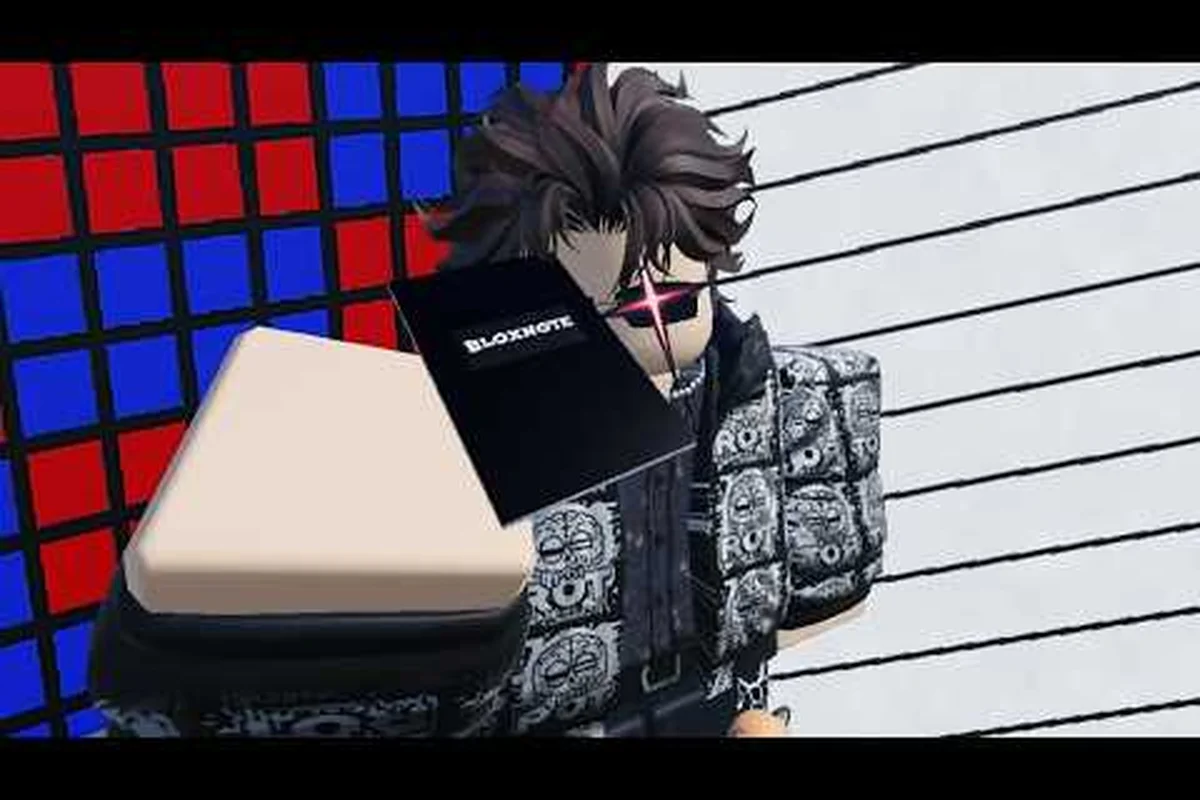
BloxNote is a Roblox social deduction game built around the Death Note IP, and most new players lose their first two rounds for the same reason: they walk into a meeting with no framework for how the four roles interact. This primer gives you the full BloxNote everything you need to know rundown before you queue, covering the round loop, every role's win condition, the shared task meter, and the patterns that decide who survives the late game.
The Round Loop, From Spawn To Reveal Screen
A round of BloxNote follows a tight, predictable loop that resets roughly every four to six minutes of in-game time. Once you read the loop, every decision in the round — task choice, meeting vote, who you follow — falls into place.
Phase 1: Loading And Role Reveal
When the server fills, every player spawns in the same lobby area and the role cinematic plays for everyone at once. You will not see other players' roles, but you will know your own and the secondary objective that comes with it. The four roles are Kira, Kira Follower, Investigator, and Civilian, and each one reframes the same map.
Phase 2: Free Roam And Task Meter
The bulk of a round is free roam. Players scatter to interactable task objects scattered across the map, and a shared task meter fills as Investigators and Civilians complete tasks. The meter is the round timer for the civilian side: once it maxes, the round ends in an automatic civilian win regardless of who is still alive.
Phase 3: Meetings And Votes
Any player can call a meeting, either by reporting a body or by hitting the emergency button once its cooldown ends. Meetings open a discussion phase followed by a vote, and the majority decides who gets eliminated. The eliminated player reveals their role on the way out, which is how the social deduction layer feeds back into the next free-roam phase.
Phase 4: Round End
A round ends in one of three ways: the task meter fills, Kira writes enough names to reach a kill threshold, or the last living Investigator falls. The reveal screen then shows the win condition that triggered, and the next round queues automatically.
| Phase | Approximate Length | Player Action | Win Condition Touched |
|---|---|---|---|
| Role reveal | 5–10 seconds | Read your role card | Sets personal objective |
| Free roam | 2–4 minutes | Run tasks or hunt | Fills task meter / writes names |
| Meeting | 30–60 seconds | Discuss, vote, eliminate | Reduces one side's numbers |
| Round end | 5–10 seconds | View reveal screen | Locks in win condition |
The Four Roles And How They Win
BloxNote splits the lobby into four asymmetric roles, and understanding the win condition is more important than memorizing any one trick. This is the core of any solid BloxNote how it works breakdown, and it is the section most worth rereading after your first few matches.
Kira
Kira's job is to write names in the Death Note and reach a kill threshold before the task meter fills. The Death Note item drops into Kira's inventory at the start of the round, and writing a name triggers a short animation followed by a kill if the target is still alive. Kira also has a brief cooldown between writes, which is why a smart Kira spaces kills out rather than chain-writing. According to community walkthroughs like this Daytra round playthrough, the most common Kira mistake is burning the cooldown in the first 30 seconds, which leaves the late game wide open for Investigators to call a clean vote.
The Kira Follower's Backup Role
The Kira Follower is a secondary killer role with a stripped-down kit. They do not start with the Death Note; instead, they can pick it up after Kira dies, which keeps the kill pressure alive across role reveals. The Follower's presence is what makes a single Kira elimination feel like a soft reset rather than a hard win for civilians.
Investigator
Investigators look like Civilians on the surface but carry a hidden scanner. When an Investigator gets close to Kira, the scanner lights up, and the Investigator can then use that information to push a vote during the next meeting. Investigator scanners are proximity-based, so running into a Kira in the hallway is what actually flips a round — the meeting only converts the scan into a result. New players often get stuck on the scanner timing, and a focused BloxNote beginner guide walkthrough covers the exact ranges and cooldown timings.
Civilian
Civilians have no special tool beyond the shared task meter. Their job is to stay alive, complete tasks, and vote sensibly. A good Civilian reads voting patterns and avoids being the first person seen alone with a body, because that is the player who gets voted off the next meeting.
| Role | Starting Item | Win Condition | Best Late-Game Tell |
|---|---|---|---|
| Kira | Death Note | Reach kill threshold | Quiet routing, avoids task clusters |
| Kira Follower | None | Inherit kill after Kira dies | Sticks close to Kira early |
| Investigator | Hidden scanner | Trigger all Kiras via meeting | Pushes votes with weak alibis |
| Civilian | None | Fill task meter | Visible task progress, stays in groups |
The Task Meter, Meetings, And How Civilians Actually Win
Civilian wins in BloxNote feel slow because the task meter is the engine, and most of the action on the civilian side happens away from the meeting table. This is also the layer most BloxNote beginner tips gloss over, because it does not look flashy on a stream highlight.
Task Meter Fill Rate Fundamentals
Each task is a small, self-contained interaction: a wiring puzzle, a delivery run, a short arcade mini-game, a body of evidence to scan. Completed tasks add a fixed amount to the shared meter, and the meter is visible to every player at all times. The practical implication is that civilians can read the round timer at a glance: if the meter is two-thirds full with three minutes of free roam left, the civilian side is winning on autopilot.
Meeting Strategy For Civilians
Civilians should not call meetings unless they have a body to report or hard information from an Investigator. Every meeting burns free-roam time, and the free-roam time is what fills the meter. When a meeting does open, the winning move is to skip if no one can explain who they saw, because a wrong vote is worse than a delayed vote. The deeper BloxNote skip vote strategy guide walks through when pushing a vote actually flips a round.
When Kira Disrupts The Meter
Kira's counter to the task meter is to keep the kill count high enough that civilian players spend the late game hiding rather than running tasks. A round where three names are written in the first two minutes tends to stall the meter, because the remaining players cluster around spawn and refuse to break off alone. This is the inflection point where the round stops being a task race and starts being a hunt.
| Scenario | Task Meter Status | Best Civilian Move |
|---|---|---|
| Two kills, meter under 50% | Behind | Push meetings, gather scans, vote |
| One kill, meter over 70% | Ahead | Ignore meetings, grind tasks |
| No kills, meter over 90% | Locked | Spread out, finish remaining tasks |
| Three+ kills, meter stalled | Crisis | Hide near Investigators, bait scans |
Beginner Tips That Stop The Bleeding
Most first-day players bleed rounds for the same handful of reasons, and most of those reasons come down to a few repeatable habits. The list below is the short version of any decent BloxNote beginner tips pass — adopt four of them and your win rate moves without you needing to learn a single new trick.
-
Stay near the action early, away from the action late. The first 60 seconds are when roles are still sorting out who is who. Standing next to a visible task player helps you build an alibi before the first body drops.
-
Read the vote count before you commit. Voting a name out based on a single accusation is how innocent Civilians get yeeted in round two. A two-person accusation with matching scan data is the minimum threshold for a confident vote.
-
Track the task meter, not the kill feed. A round where you have seen one body but the meter is at 80% is already won. Stop chasing and start finishing tasks.
-
Use the report button on cooldown, not on reflex. Calling a meeting the second you see a body telegraphs where you were standing. Walk away from the body first, then call the meeting from a different angle.
-
Learn the Death Note by reading the Death Note item guide before playing Kira. The writing animation, the kill cooldown, and the ID requirement are the three mechanics that decide every Kira round, and they all stack.
Advanced Patterns That Decide Late-Game Rounds
Once the basics are second nature, the rounds that decide your win rate come down to a handful of higher-level patterns. These are the moves that show up in BloxNote advanced guide roundups, and they are also what separates a 45% win rate from a 60% one. Pairing these with focused practice is the cleanest answer to the question of BloxNote how to get better without grinding 200 more rounds.
Pattern 1: The Mirror Vote
When two accusations collide in a meeting, vote the player who defended their alibi with specifics. Players who invent alibis on the spot tend to deflect, while players telling the truth usually have timestamps. This pattern is how good Investigators close a round without ever firing their scanner.
Pattern 2: The Scanner Bait
A coordinated Civilian can deliberately walk past a suspected Kira to bait the scanner, then sprint to the meeting room. The scanner ping registers for the nearby Investigator, the Investigator calls the meeting within seconds, and the vote lands before Kira can rewrite the bait. This is one of the cleanest ways to convert a proximity scan into a confirmed elimination.
Pattern 3: The Late-Round Kira Pivot
Once the task meter crosses 80%, a Kira who has not yet reached the kill threshold needs to switch from slow play to chain kills. The pivot is risky because the kill cooldown stays the same, but it is the only way to claw a round back. The trade-off is that the spike in kills also spikes the meeting frequency, which is why late-round Kira is a tempo game, not a position game.
Pattern 4: The Civilian Stack
Civilians who visibly group up and run the same task chain build an unbreakable alibi block. The pattern works because it makes it mathematically impossible for any one of them to be the killer in a given window, which removes them as a vote target and frees them to push the meter.
Pattern 5: The Investigator False Flag
Seasoned Investigators sometimes call meetings with weak scan data on purpose, knowing the real Kira will over-defend and slip up in their story. The false flag trades one round for information, and it is a clean way to seed doubt that pays off two meetings later.
| Pattern | Best Used As | Risk If Misplayed | Win-Rate Impact |
|---|---|---|---|
| Mirror vote | Civilian / Investigator | Vote out an ally | High |
| Scanner bait | Civilian | Get killed mid-bait | Medium-High |
| Late-round pivot | Kira | Cooldown locks you out | Medium |
| Civilian stack | Civilian | Slows the meter | Medium |
| Investigator false flag | Investigator | Wastes a meeting | Medium |
Frequently Asked Questions
How long does a BloxNote round usually last?
Most rounds run between four and six minutes of in-game time, with the bulk spent in free roam. Short rounds tend to be Kira blowouts, while longer rounds usually mean the task meter is grinding toward a civilian win.
Can you play BloxNote solo, or do you need a full lobby?
The server fills automatically, so solo queue works fine. The only real advantage of a pre-made squad is voice comms, which you can set up with the voice chat and lobby settings guide if you want to play with a regular group.
What is the fastest way to learn the Death Note mechanics?
Read the in-game item description on your first Kira round and then watch one full creator playthrough. The BielWtrades first-look video is a clean reference because it walks the early-game decision tree at a beginner pace.
Does BloxNote cross over with the Death Note anime?
The role names, the notebook mechanic, and the Shinigami-flavored cosmetics are direct references to the Death Note IP. The round structure is original, but the flavor is faithful enough that fans of the source material tend to pick up the game fast.
Is BloxNote beginner-friendly for someone who has never played social deduction games?
Yes, because the four-role split is narrower than games like Among Us and the task meter gives civilians a clear win condition to fall back on. Spend your first two rounds on Civilian to learn the map and the meter, then move into Kira once the round loop feels automatic.