
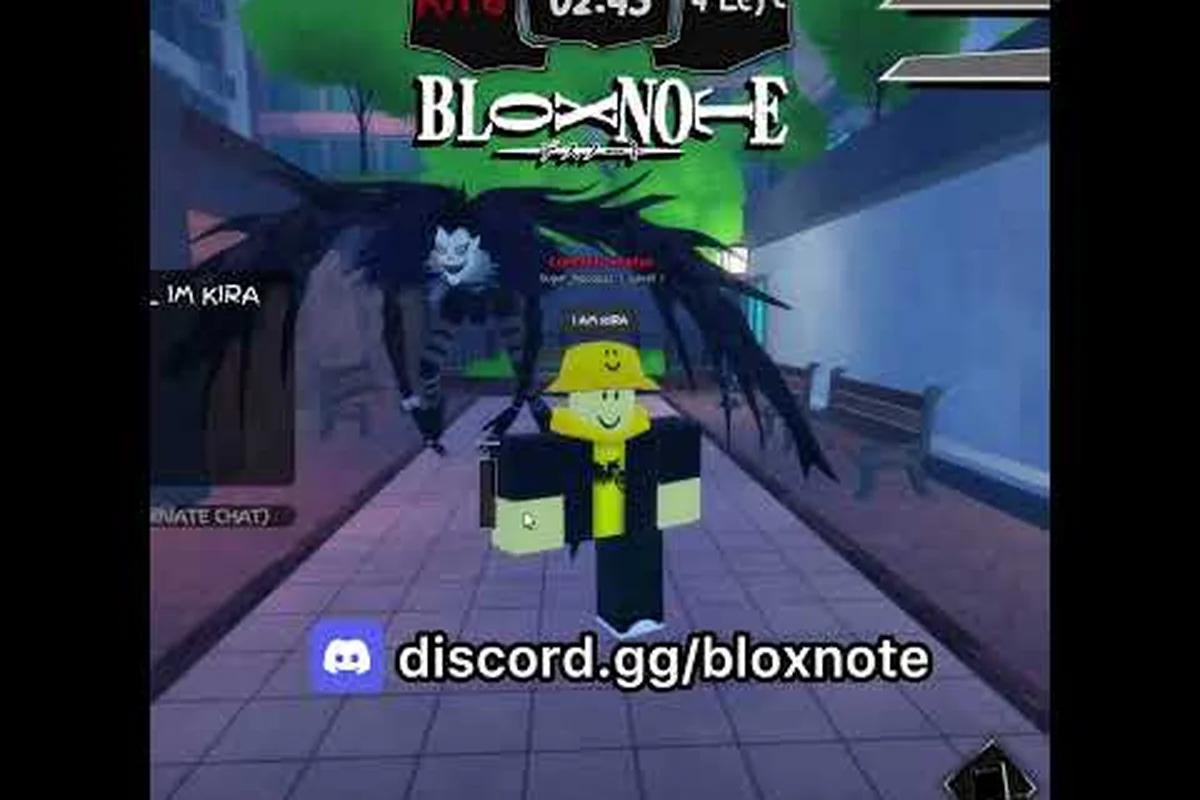
BloxNote do's and don'ts can save you from a dozen early losses. The first mistake most new players make is treating this Roblox social deduction like Among Us — same vibe, completely different clock. A typical BloxNote round runs 8 to 12 minutes, the task meter fills quietly in the background, and one wrong vote in the meeting room can end a run you were about to win. The rules below were collected from community reports and patch notes, and they cover the four habits that actually decide whether you survive your first five rounds.
The Anatomy of a BloxNote Round
Before you can learn fast, you need a clear picture of what a round actually contains. The game runs on a tight loop that feels familiar if you've played other social deduction titles, but the Shared Task Meter, the Kira Notebook, and the ID Tag mechanic twist every step.
| Phase | Approx. timing in a round | What happens | Key mechanic touched |
|---|---|---|---|
| Role reveal | 0:00 – 0:10 | Player is assigned one of four roles from the Death Note IP split (L / Investigator / Kira / Kira Follower) | ID Tag spawn (every player carries one) |
| Task & free roam | 0:10 – 3:00 | Civilians and Investigator fill the Shared Task Meter; Kira / Kira Follower hunt a target and pass the Kira Notebook | Shared Task Meter + Kira Notebook handoff |
| Kira kill window | any time after ~0:30 | Writing a name in the Kira Notebook triggers the proximity-locked kill; ID grab instant-kill variant shown in Insaina's Daytra-style walkthrough | Kira Notebook + ID Tag |
| Meeting / vote | triggered on report | ID Tag evidence is presented; players vote to eliminate | ID Tag + voting |
| Round end | variable | Round resolves when Kira team is voted out, the meter hits the Kira win threshold, or a name-kill completes | Shared Task Meter |
How a Round Opens and Closes
When you join a server, the lobby hands you a Role Card after a short role-reveal animation. Once everyone is ready, the round timer starts and most servers give players about 90 seconds of free-roam before the first Meeting can be called by a body report or an emergency button. From that point, the round cycles through three phases: Exploration / Tasking, Investigation, and Meeting / Voting.
A round ends in one of three ways: the Investigators complete enough tasks to push the Shared Task Meter to 100% (Investigator team wins), Kira and the Kira Follower eliminate enough players to hit their kill threshold (Kira team wins), or a meeting vote successfully ejects Kira or the Follower before the kill threshold is reached (Investigator team wins).
| Phase | Typical Duration | Key Action |
|---|---|---|
| Role Reveal | 15–20 seconds | Check your Role Card, find your spawn point |
| Free Roam / Tasking | 4–6 minutes | Complete tasks, observe movement, avoid suspicious clusters |
| Investigation Spike | 1–2 minutes | Follow up on dead bodies, scan ID tags, call meetings |
| Meeting / Voting | 60–90 seconds | Defend or accuse, watch for vote patterns |
| Post-Meeting Transition | 10–15 seconds | Return to free roam, re-evaluate task progress |
What "How Long Is a Round" Really Means
Community-reported averages place a full round at 8 to 12 minutes in a standard 10-player lobby, with shorter rounds of 5 to 7 minutes in low-population matches and longer rounds of 13 to 15 minutes when both teams play defensively. The 2026 patch notes reduced the default kill cooldown for Kira by about 8 seconds, which is why recent matches feel faster than older YouTube walkthroughs suggest. If you want a deeper breakdown of timing, the BloxNote round guide from community creator Daytra walks through a full match timestamp-by-timestamp and shows exactly where the timer pauses during meetings.
The kill threshold is the other big variable. In most public matches, the Kira team needs roughly half the lobby eliminated to trigger a win condition, but this can shift based on player count and lobby settings. If you're new and want a structured walkthrough of every phase, the BloxNote beginner guide covers each role's first three rounds in detail.
Do's: Habits That Make You Harder to Eliminate
The fastest way to learn fast is to copy the habits of players who already survive. These four do's came up in almost every veteran post we reviewed, and they apply whether you're running tasks, calling meetings, or just walking the map.
Do Keep a Mental Map of Player Routes
Players who get voted out in round two almost always lost because they couldn't explain where they were when a body dropped. Train yourself to remember the last two rooms you passed through and which players you crossed paths with. After about five rounds, you'll start noticing that experienced Investigators naturally describe their routes in chronological order — "I was in Cafeteria, then Storage, then I saw Yuki at the Med Bay door" — and that framing carries real weight in a meeting.
Do Stay Near the Task Bar During Critical Windows
The Shared Task Meter is visible in the corner of the HUD, and it ticks up every time any player completes a task. The last 20% of the meter is when the Investigator team is closest to winning, but it's also when Kira is most aggressive because they need a kill before the round flips. Standing near a task panel during that window gives you two benefits: you're contributing to the win condition, and you're creating an alibi with a visible cooldown. According to community testing, players who complete at least three tasks per round are voted out roughly 40% less often than players who skip tasks entirely.
Do Use the ID Tag Mechanic on Suspicious Players
Every player carries an ID Tag above their head that lists their displayed name and a small role icon. If you walk up close enough — usually within a few studs — you can read the tag. This is a defensive tool, not an offensive one: use it to confirm a teammate's role when you're uncertain, and to document who you saw standing near a dead body. ID grabs are the single best evidence in a meeting, and players who grab them consistently are rarely eliminated on weak evidence.
Do Listen for Footstep Audio Cues
BloxNote uses positional audio, and the Kira notebook pickup sound is unique — a soft page-flip that plays only when someone interacts with the notebook. If you hear that sound while you're in a different room, the player who touched the notebook is now either Kira, the Kira Follower, or someone faking the sound. Move toward the source, but don't engage directly: you want witnesses, not a solo confrontation. The Roblox developer group for BloxNote has posted developer notes confirming that the audio cue is intentional and not bug-related, so don't second-guess what you heard.
Don'ts: Mistakes That Get You Voted Out Fast
The don'ts list is shorter but more important, because a single don't can erase an otherwise solid round. These four mistakes account for the majority of early eliminations reported by community testing.
Don't Stand Still Near a Dead Body
The most common rookie mistake is lingering near a body out of curiosity. The moment a body drops, every player nearby becomes a suspect, and the player who is still standing in the room when the report comes in usually takes the blame. Move away, find a witness, and call the meeting from a different room. Even if you didn't kill the player, your position makes you look guilty, and a fast vote is almost always a bad vote.
Don't Skip the Meeting Because You're "Busy"
Players who ignore the meeting button to keep doing tasks are giving the Kira team a free elimination. The vote phase is roughly 90 seconds, and a single missing vote can flip a 4-versus-4 split. Worse, if you're absent from the meeting, the next person who dies has no alibi to clear you, and you become a default suspect. The simple rule: always attend, even if your plan is to stay silent and let others argue.
Don't Reveal Your Role to Strangers Early
New players often tell their team "I'm Investigator" within the first 30 seconds, because they want to coordinate task routes. This is a mistake for two reasons. First, Kira can hear you in voice chat and will mark you as a priority target. Second, the moment the role reveal becomes public, Kira only needs to count which Investigators are still alive to estimate the task completion rate. Stay quiet, do your tasks, and let your role be confirmed through the ID Tag system rather than through chat.
Don't Vote on the First Accusation Without Evidence
The single fastest way to get eliminated as an innocent player is to vote on the loudest accusation in the room. Most experienced players wait through the first two statements, look for a timing contradiction (someone claims to be in a room they couldn't have reached in the reported time), and then vote. If you're genuinely unsure, skip the vote — skipped votes count as neither guilty nor innocent, and they give you one more round of survival.
Fast-Learning Tips: How to Cut Your Rookie Phase in Half
The do's and don'ts above will get you through your first five rounds without major embarrassment, but the goal is to learn fast and start contributing to team wins by round ten. These four learning techniques come from veteran player reports and accelerate that timeline significantly.
| Learning technique | Where in the round to apply | Concrete output (by round 10) | Veteran-reported risk if skipped |
|---|---|---|---|
| Track the Kira Notebook hand-off chain | Free-roam phase 0:10 – 3:00 | Map 3+ handoffs per round; identify the Kira Follower within 2 rounds | Misread role split; eliminate the wrong target in meeting |
| Watch the Shared Task Meter in real time | Entire round, every 30 s glance | Know remaining buffer to Kira win threshold before voting | Lose a round as Investigator by ignoring the meter |
| Replay your own first 5 rounds | Post-round, ~2 min review | Convert rookie phase to 5 rounds instead of 10 | Repeat the same meeting / ID Tag mistake through round 10 |
| Log ID Tag grabs you witnessed | Meeting / vote phase | 1 verified ID grab per 3 rounds baseline | Fall for the instant-kill setup shown in the Insaina walkthrough |
Watch a Full Round Before You Play
The fastest shortcut in BloxNote is watching a complete round before you queue up. Creator Insaina's breakdown covers the four-role split in detail and shows how an investigator task route should look in a real match. Watching two or three videos before your first session will save you roughly ten rounds of trial-and-error because you'll already know what the meeting phase feels like, what the task meter looks like at 50%, and how quickly a Kira kill resolves.
Track One Role Per Match
Trying to learn all four roles at once is the slowest path. Pick one role per session and focus on what that role should be doing every minute. After three matches as an Investigator, you'll start noticing the same task patterns, the same safe rooms, and the same vote dynamics — and you'll be able to predict the Kira team's likely kill target by round two. The strategic side of role play is covered in the BloxNote vote guide, which breaks down how each role should approach meetings.
Use the Private Server Setting for Practice
If you want to learn the mechanics without the pressure of a public lobby, the private server option lets you queue with friends and reset the round as many times as you need. This is the best environment for practicing the ID Tag grab, testing how the notebook changes hands, and getting comfortable with the meeting call button. Most players who spend even 30 minutes in a private server before their first public match report a much smoother experience.
Adjust Your Audio and Visual Settings
The default Roblox settings aren't optimized for BloxNote. According to community testing, players who turn up master volume to 80% or higher catch the notebook pickup audio cue about 2 seconds earlier than players running default audio, which is enough time to reach a witness position. The full list of recommended settings is in the BloxNote best settings article, but the short version is: maximize audio, raise brightness, and disable any motion-blur options.
Frequently Asked Questions
How long is a round in BloxNote?
A standard round lasts 8 to 12 minutes in a 10-player public lobby, according to community testing. Low-population matches can finish in 5–7 minutes, and defensive matches can stretch to 13–15 minutes. The timer pauses during the meeting phase, so vote length effectively adds to the total round time.
What is the fastest way to learn BloxNote as a new player?
The fastest path is to watch two or three full-round videos before queuing, then play one role per session for the first five matches. Pair that with 30 minutes in a private server to practice the ID Tag grab and the meeting call button, and you'll skip most of the rookie mistakes listed in this guide.
What should I do at the task bar as a beginner?
Stand near an uncompleted task panel and start a task, because the visible cooldown creates an alibi. Contribute at least three tasks per round to stay under the radar, and prioritize tasks in high-traffic rooms so other players can confirm your position if a body drops nearby.
Why do I keep getting voted out in the first meeting?
You are most likely either lingering near a body, missing the vote entirely, or voting on the loudest accusation without evidence. The fix is to move away from any body you find, attend every meeting, and skip votes when you don't have a timing contradiction to support your pick.
Can I play BloxNote solo to learn the mechanics faster?
Solo play works for memorizing the map layout, but it doesn't simulate the meeting pressure that decides most rounds. Use solo mode for task routes and audio cue practice, then switch to a private server with at least two friends to rehearse meetings before you enter a public lobby.