
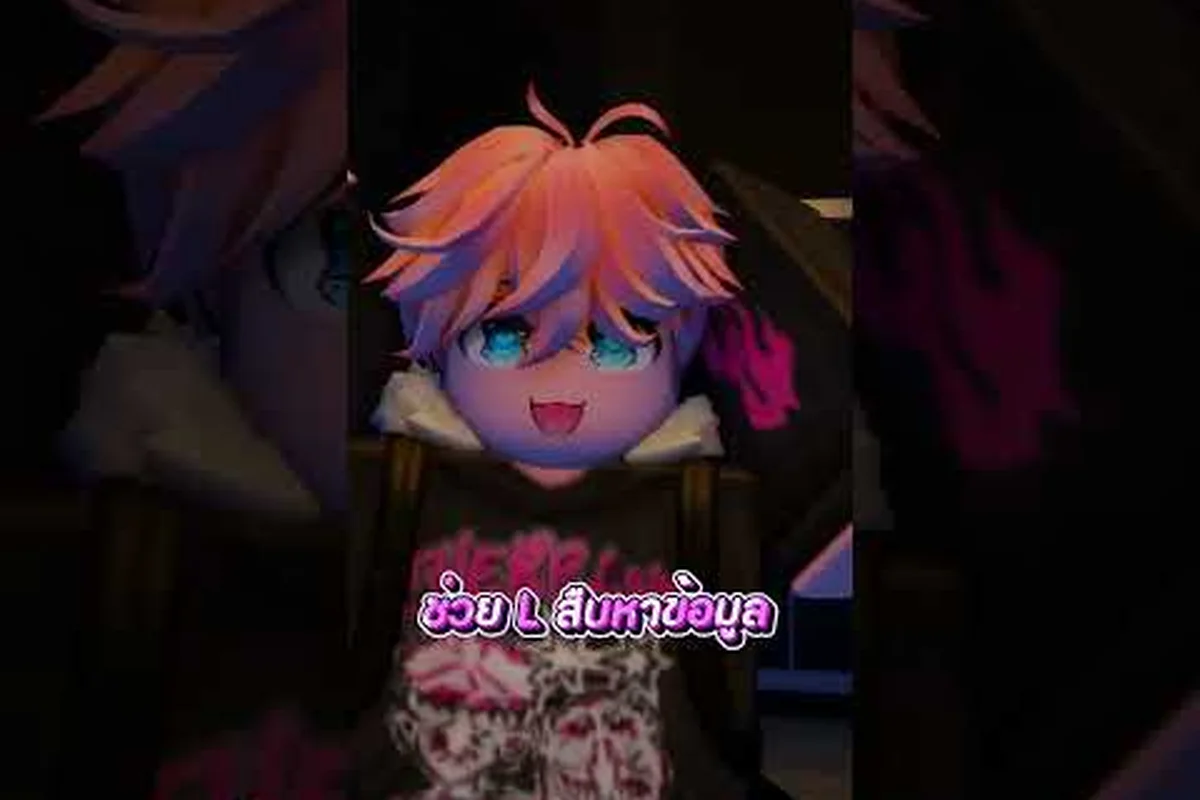
The BloxNote shinigami eyes lore is the connective tissue that turns a simple social-deduction Roblox round into a Death Note tabletop session. The notebook in the lobby is not just a glowy prop — it carries the full anime rule set, from who is allowed to write a name down to what it costs a player to peek behind another avatar's display name. Understanding that layer of the game explains almost every weird animation, ID-theft window, and task-meter penalty you see during a real round, and it is exactly where the developer leans hardest on canon material to make the experience feel authentic.
If you have ever wondered why a player suddenly knows your name in a meeting, or why buying the eyes seems to "cost" something invisible, the answer lives in the original manga's Shinigami Eye bargain. BloxNote transplants that bargain almost beat for beat, then layers a Roblox-friendly economy on top so the deal still matters mechanically. This article walks through that transplant: the anime rules the game keeps, the rules it adapts, and the rules it invents to make the deal readable inside a fast five-minute round.
The Anime Source Material Behind BloxNote Shinigami Eyes
The strongest reason players label BloxNote as anime accurate is that the Shinigami Eye sequence is lifted directly from the manga's middle act, with almost no creative reinterpretation. In the original work, the Shinigami Ryuk explains the bargain to Light Yagami: a human can purchase the eyes of a Shinigami, which lets them see a target's true name and remaining lifespan by looking at their face, but the cost is roughly half of that user's own remaining lifespan. BloxNote keeps the deal's shape and re-prices it inside the Roblox economy.
The Original Death Note Eye Deal
In the source material, the eye deal has three mechanical consequences. First, the user can see a target's real name above their head, which removes the friction of having to learn a name through other means. Second, the user can see a numeric lifespan counter ticking down, which lets them plan kills based on how much natural time a target has left. Third, the user pays for the privilege with a flat 50% deduction of their own remaining lifespan — a price Light refuses for most of the story because the cost is permanent and visible in his own counter.
BloxNote transposes each of those consequences into something the Roblox engine can render. The true-name reveal becomes a temporary on-screen ID tag, the lifespan counter becomes a percentage of the task meter, and the 50% lifespan price is restated as a chunk of the user's own task progress. The change in currency — natural years for game progress — is what makes the deal feel native to BloxNote rather than copy-pasted, and it is also why veteran players describe the purchase as a "lifespan trade" even though no real years are at stake.
Why BloxNote Reads as a Death Note Fan Game
The label "BloxNote death note fan game" exists because the developer mirrors the anime's rule layer, not just its costumes. The Kira role, the L successor chain, the Shinigami Eyes deal, and the four-act investigation loop all map onto the manga's plot beats. For new players, that fidelity matters because it means the in-game economy is internally consistent: a buff that seems unfair in isolation is fair when you remember the price the buyer already paid for it. The official Light Yagami Wikipedia page describes the same bargain, which is why BloxNote's adaptation feels like a translation rather than a remix.
| Anime Rule | BloxNote Translation | Effect on the Round |
|---|---|---|
| See a target's true name and lifespan | Temporary on-screen ID reveal for ~30 seconds | Removes the "learn the name first" grind |
| Pay 50% of remaining lifespan | Spend a portion of the user's own task meter | Buffed Kira player is slower on tasks |
| Deal is irreversible | Deal persists for the rest of the match | Late-game Kira is permanently weaker on the bar |
| Ryuk is the broker | No visible broker; eyes appear in the shop | Lore stays off-screen, mechanics stay in-game |
That table is the cleanest way to see why BloxNote is described as "inspired by death note" rather than "loosely based on death note." Every anime mechanic has a mapped Roblox mechanic, and the mapping is deliberate enough that the round still feels like a Death Note scene rather than a generic social-deduction game.
The Notebook Owner Mechanics in BloxNote
A round of BloxNote starts the moment a Death Note spawns in the map. The first player to interact with it becomes the notebook owner, and that ownership is what flips the round from a quiet task grind into a hunt. The owner can write names, pass the notebook, and eventually purchase the Shinigami Eyes. Each of those actions costs something, and the cost ladder is the spine of the entire Death Note role.
How the Death Note Owner Is Chosen
The notebook spawns in a fixed location inside the map and glows softly until touched. Once a player touches it, the notebook attaches to their avatar and the Death Note owner flag is set in the server's role table. From that point on, the owner is the only player in the round who can write names into the notebook. The first ownership handoff is a moment of high tension because every other Kira-aligned player is watching to see who picks it up, and every Investigator is one meeting away from asking the obvious question.
A handful of edge cases matter for the notebook owner. If the owner disconnects, the notebook respawns at its original location after a short timer. If the owner is voted out, the notebook transfers to the next player who interacts with it, which usually happens within seconds. If the round ends before the notebook is picked up, the next round simply starts with the notebook back at the spawn point. Those rules are why BloxNote death note owner guides all recommend sprinting to the spawn as soon as the round starts — the first three seconds decide who holds the kill button for the rest of the match.
What the Owner Can and Cannot Do
Ownership is a permission, not a personality. The notebook owner can write a name they have learned, can pass the notebook to a teammate via a short animation, and can buy Shinigami Eyes from the in-round shop. The owner cannot write a name they do not know, cannot use the eyes without paying the lifespan cost, and cannot transfer ownership to a player who refuses the pass animation. The constraints make the role feel less like a power trip and more like a ticking job: the owner is powerful, but every use of that power either spends the task meter or reveals information to the room.
The restrictions are also why the round has a natural escalation arc. Early in the round, the notebook owner plays passive, learning IDs by watching meetings and reading usernames. Mid-round, the owner starts writing names, which is the moment Investigators begin narrowing suspects. Late in the round, the owner either buys the eyes for a one-shot ID read or passes the notebook to a follower who can spend the rest of the round hiding. The arc is the same arc the anime plays out across dozens of episodes, compressed into a single five-minute match.
How the BloxNote Notebook Rules Translate to a Roblox Round
The notebook rules in BloxNote are where the developer makes the most interesting design choices, because the rules have to be strict enough to feel canonical and loose enough to fit a 10-player Roblox server. The compromise is a layered rule set: a hard core that mirrors the anime, and a soft periphery that adapts the rules for fast round pacing.
The Hard Core of the Rules
The hard core of the BloxNote notebook rules) is a list of prohibitions that cannot be broken by any player, in any role, at any time. The notebook can only write a name the writer knows. The notebook can only be held by one player at a time. The notebook can only be passed during a live transfer animation. The eyes can only be purchased once per round per player. None of these rules have exceptions, and the server enforces them silently — there is no warning popup, just a denied action.
| Rule | Anime Equivalent | Why It Exists in BloxNote |
|---|---|---|
| Write a known name only | Light must learn L's real name | Stops blind spam-killing from the lobby |
| One owner at a time | Notebook cannot be copied | Makes the ID-theft window readable |
| Eyes purchased once per round | Eye deal is a one-time bargain | Prevents the meta from devolving into permanent reveals |
| Notebook respawns if dropped | Notebook is bound to the holder | Keeps the round solvable after an early disconnect |
| Kill has a one-second animation | Death by heart attack is described, not shown | Reads on a busy Roblox screen without sound |
That table is essentially the developer contract for the round. Every other system in BloxNote is built on top of those five rules, and every guide worth reading — including the shikami-eyes explainer — treats them as non-negotiable.
The Soft Periphery of the Rules
The soft periphery is where BloxNote is allowed to invent. Cooldowns, animation lengths, lifespan cost percentages, ID-reveal timers, and the pass animation are all soft — they can be patched, they have varied across updates, and they are the values most likely to shift in a future patch. Community-reported numbers (as of September 2026) put the eye cost at roughly 15% of the task meter, the ID-reveal window at around 30 seconds, and the pass animation at just over a second. Those numbers are not officially documented, and the developer has not committed to them in any changelog, so they should be treated as community testing rather than canon.
The soft periphery is also where the game diverges from the anime. The manga's eye deal costs half of a literal lifespan; BloxNote costs a slice of a Roblox task bar. The manga's ID reveal is permanent; BloxNote's reveal is timed. The manga's notebook is a physical prop on a desk; BloxNote's notebook is a glowing item attached to a Roblox character. Each divergence is a design choice that trades strict canon for round pacing, and most of the choices are good ones — the round would feel glacially slow if every ID reveal lasted an entire match.
Reading the Round: Strategy Built on the Lore
The lore matters most when it changes how a player behaves in a live round. Knowing that the eye deal costs task-meter progress, for example, reframes every meeting vote: a Kira who already bought the eyes is structurally slower on tasks, which means the Investigator side is closer to the win threshold than the bar suggests. The strategy section below pulls a few of those mechanics into a usable playbook.
How a Kira Should Spend the Eye Cost
The first decision a notebook owner makes after writing one or two names is whether to buy the eyes. The community-tested cost is steep, the reveal window is short, and the buff is permanent for the rest of the round. A clean rule of thumb is to buy the eyes only when you have a specific target in mind — usually an L replacement or a known Investigator — and to avoid the eyes entirely if you are already winning on the task bar. The logic is that the eyes cost the bar progress you would otherwise have spent, and the bar is the Investigator win condition.
| Situation | Buy the Eyes? | Reason |
|---|---|---|
| You are the only notebook owner, L is alive, and you know nobody's real name | Yes | One clean reveal can flip the round |
| You are winning the task bar by 40%+ and the round is mid-game | No | The cost is larger than the value |
| A follower is about to be voted out and you need to clear their name | Yes | A timed reveal saves a teammate |
| You just wrote a name and the room is suspicious of you | No | Spending more time in the shop telegraphs your role |
| The round is in the final two minutes and the bar is close | Yes | The reveal can stall Investigators long enough for a steal-the-notebook play |
The table is intentionally opinionated — the eyes are a high-variance buff, and the wrong buy usually ends the round in a vote. Most veterans treat the eyes as a finisher, not a starter.
How an Investigator Should Read the Eye Cost
For the Investigator side, the eye cost is a tell. If a player spends time at the in-round shop, the bar drops by a visible chunk, which is the same chunk a Shinigami Eye purchase costs. Community testing puts the drop somewhere between 10% and 20% of the bar, and the drop is large enough that a meeting called immediately after a shop visit will usually catch the buyer mid-stride. The smart play is to call a meeting the second you see a player running away from the spawn shop, and to spend the meeting asking where that player was in the last ten seconds.
A second tell is the ID-reveal animation. The eyes trigger a short visual effect on the buyer's screen, and the target's ID is shown in a way other players can sometimes spot. The window is short, but it is not invisible, and an Investigator who is watching the bar carefully can correlate a sudden bar drop with a player who was standing near a Kira-aligned target. That correlation is rarely enough evidence to win a vote on its own, but it stacks with other tells, and a stacked case is the difference between a clean skip and a clean elimination.
Frequently Asked Questions
Is BloxNote an officially licensed Death Note game?
No. BloxNote is a fan-made Roblox experience inspired by the manga and anime, and it is not affiliated with the original copyright holders. The developer leans on canonical names like Kira, L, Near, Mello, and Shinigami Eyes, but the studio operates as a community project. The anime-accurate feel comes from the developer transcribing the rule set by hand rather than from a licensing deal.
How much of the task meter does Shinigami Eyes actually cost in BloxNote?
According to community testing, the eyes cost roughly 10% to 20% of the task meter, with most players reporting numbers near 15%. The exact value is not documented in any official changelog, so treat the figure as a community-reported estimate rather than a hard constant. The bar visibly drops when the purchase happens, which is the simplest way for an Investigator to confirm a buy.
Can a non-owner buy the Shinigami Eyes in BloxNote?
Yes, in principle, but it is rarely useful. The eyes reveal a target's ID for the buyer's screen, and only the notebook owner can act on that ID by writing the name. A non-owner who buys the eyes is essentially paying task-meter progress for a number they cannot use, which is why almost every round sees the eyes purchased by the current notebook owner. The exception is the second Kira, who may buy the eyes to pass a clean ID to the owner via a quick whisper.
Does the notebook respawn if the owner leaves the round?
Yes. If the owner disconnects, is kicked, or otherwise leaves the server, the notebook returns to its original spawn point after a short timer. The next player to touch it becomes the new owner, and the round continues. The mechanic exists to keep every match solvable and to prevent a single disconnect from ending the round in a draw, and it is one of the soft-periphery rules most likely to be patched if the developer decides to tighten the loop.
Why does the game sometimes feel more faithful to the anime than other Death Note Roblox games?
The faithfulness comes from the rule-first design choice. The developer built the round around the five hard notebook rules, then layered animations, shop costs, and reveal timers on top, rather than starting with a generic social-deduction template and bolting on Death Note skins. That ordering is why the Death Note fan game on Roblox reads as a tabletop recreation of the manga's middle act instead of a reskin of a standard imposter game.