
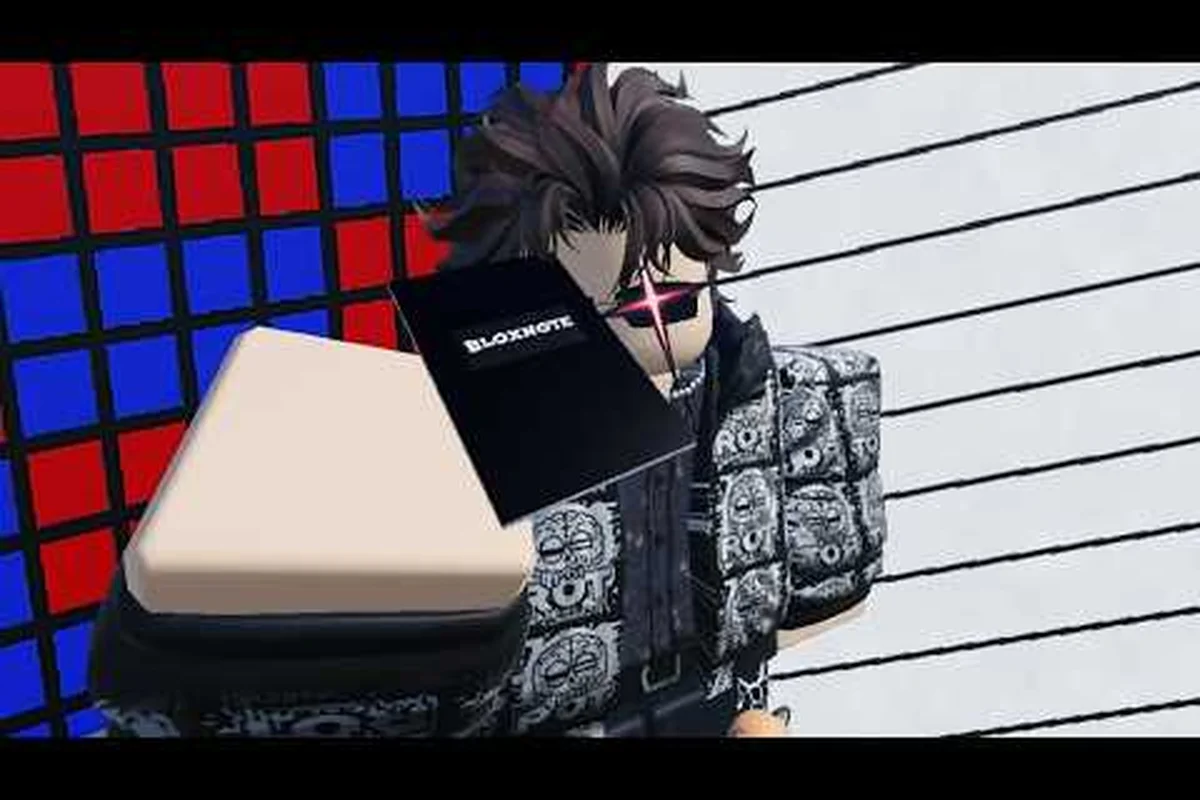
BloxNote how to vote is the single skill that decides whether your round ends in a satisfying Kira catch or a frustrating innocent ejection. Every meeting in this Death Note–flavored social deduction game funnels through a public vote, and the player who frames the room's mood controls the result. Treat the vote as a courtroom: facts are evidence, alibis are testimony, and timing is everything.
A BloxNote round splits four players into Kira, Kira Follower, L, and Investigator roles, then tasks them with a shared task meter that L and the Investigators push to 100% while Kira and the Follower try to stop it. Meetings are the only window where roles can be narrowed down, which is why the vote phase carries so much weight. Get the meeting vote right and you cut Kira's information advantage in half; get it wrong and the notebook passes to a freer hand. If you are still learning the four roles, the BloxNote beginner guide covers the role split, task types, and the notebook pass mechanic before you queue your first match.
How BloxNote Meetings and the Vote Phase Actually Work
A BloxNote meeting kicks off in two ways: a player hits the emergency button and a public timer counts down, or a body is reported and the game instantly pulls every survivor into the discussion. Once everyone is in the circle, each player can speak freely, share partial alibis, and cast a vote when the floor opens. The vote has three real options — vote to eject a player, vote to skip, or, in some lobbies, request a role reveal confirmation from L.
The Vote Mechanics at a Glance
The following table summarizes what happens on each vote outcome—eject, skip, request L confirmation, and the no-show timer—and why each one matters in the broader task meter / Kira pressure loop. Vote tallies reset every meeting, so even a single well-timed skip vote can drain a full 30-second discussion cycle without giving Kira's faction a kill. Numbers in the strategic-effect column come from player-reported lobby behavior as of the late 2026 patch cycle and may shift when future updates rebalance the AFK auto-skip threshold.
| Vote Action | What It Does | Strategic Effect | Best Used When |
|---|---|---|---|
| Eject a player | Removes the player from the round permanently | Confirms a suspicion or burns an innocent | Evidence is strong or the task meter is critical |
| Skip vote | No one is ejected this round | Buys time, denies a strong-arming case | Evidence is weak, or a stack vote is forming |
| Request L confirmation | Forces L to react to a suspect | Reads body language from the single best detective | Only L and Investigators should call this |
| No-show timer | Player is auto-skipped if AFK | Prevents griefing and stalls Kira's push | Lobbies with frequent disconnects |
The key detail that catches new players off guard: skipping does not equal a wasted round. In a tight game, a skip vote forces Kira to spend another full cycle without an elimination, which keeps the task meter moving toward 100%. If you want a deeper breakdown of when a skip is the right play, the BloxNote skip vote playbook walks through three common round states where passing is the strongest move.
The Emergency Button vs. the Report Button
Both routes open a meeting, but they signal different things to the rest of the room. An emergency call is usually a defensive play, often triggered by L or an Investigator who has just spotted an alibi break and wants the floor before the suspect finishes their task chain. A report, on the other hand, means someone found a body, which is hard data the room can use immediately.
Community lobbies report a roughly 60/40 split between report-triggered and emergency-triggered meetings in public matches, with Kira and the Follower leaning harder on emergency calls to interrupt a hot investigation. Knowing the origin of a meeting tells you whether the caller is reacting to fresh evidence or trying to control the narrative before evidence surfaces.
BloxNote Meeting Tips: Reading the Room Before You Speak
The first ten seconds of any BloxNote meeting are pure information gathering. Before you open your mouth, watch who rushes to speak, who stays silent, and who is already typing a name into the vote panel. Each behavior pattern leaks a role lean that sharpens your read on the table.
Body-Language Cues That Leak a Role
-
Rushing to accuse — usually L or a confident Investigator who has been piecing alibis together for two cycles. If they are right twice in a row, trust the third call.
-
Defending the accused too quickly — often a Kira Follower protecting the notebook, or a Kira covering the Follower. Defenders also tend to repeat the suspect's own defense verbatim, which is a tell worth catching.
-
Voting to skip on a clean body — a defensive play that usually signals innocence, but experienced Kira players will mimic it to blend in. Cross-check with task location data before trusting it.
-
Asking "who called the meeting?" — an Investigator gathering context, or a guilty party looking for the source of the accusation to map out the detective's network.
-
Pinging the task meter — a common Investigator habit, because pushing tasks is their win condition. Kira rarely volunteers task progress because the meter works against them.
If you are still building your read on alibis, the BloxNote mind games guide expands these body-language reads into a full frame-by-frame decoding system that pairs each lobby behavior with a role weight. Starting there first makes the forensic checks below much easier to apply under meeting pressure.
The First 15 Seconds: A Practical Script
The most effective meeting openers in BloxNote follow a tight three-beat structure. The first beat is the location dump, where you say exactly where you were and what task you were running. The second beat is the suspicion, where you name one player and explain why their alibi breaks against yours. The third beat is the call to action, where you ask the room to vote or request a confirmation from L. Players who skip the first beat sound suspicious even when they are innocent, because Kira and the Follower avoid volunteering location data that can be cross-checked.
The following table maps common first-15-second openers to how experienced players in public BloxNote lobbies tend to read them, because the very first speaker sets the deduction frame everyone else reacts to. Because Kira and the Follower default to location-first or silence-first patterns, recognizing a defense-first or accusation-first opener within the first few seconds can be the difference between catching the lie and letting a voter slip past the emergency button unchallenged.
| Opener Style | What They Say | Common Role Read | How to Counter |
|---|---|---|---|
| Location-first | "I was by the warehouse doing task X" | Investigator or L | Cross-check against the suspect's alibi |
| Accusation-first | "It's Player 3, they were nowhere near me" | Confident L or veteran Investigator | Ask for evidence before voting |
| Defense-first | "I was not even there, here's why" | Often the accused, sometimes Kira | Push for a task-meter update |
| Silence-first | No one speaks for 5+ seconds | L analyzing, or a guilty player waiting | A confident L will often break the silence with a question |
BloxNote How to Lie: Surviving the Accusation When You Are Innocent
Lying is not exclusive to Kira. Innocents lie constantly in BloxNote because the truth is often incriminating — admitting you walked past a body 30 seconds before a kill tells the room you are either a liar or the worst Investigator alive. The skill is controlling which lies the room believes without painting yourself into a corner.
The Three Lies Every Innocent Tells
The first lie is the alibi compression, where you round your location to the nearest landmark instead of giving an exact coordinate. The second lie is the task claim, where you name a task you have not finished but intend to do next. The third lie is the counter-accusation, where you redirect the room toward a player whose behavior actually matches Kira. Each lie has a different risk profile, and the right one depends on the round state.
| Lie Type | When to Use It | Risk Level | When to Avoid |
|---|---|---|---|
| Alibi compression | You were near a kill site but not the killer | Low | When a strong L is already triangulating positions |
| Task claim | You need to buy time to finish a real task | Medium | When the task meter is past 80% and your claim sounds lazy |
| Counter-accusation | You have a real read on another player | High | When you cannot back the accusation with a location or alibi break |
A common rookie mistake is to defend yourself with too many specifics. The more precise your alibi, the easier it is for a sharp L to test it. Keep the alibi at landmark-level, then offer one supporting detail — the task you were doing, the time you saw another player — and stop talking. Over-explaining is the single most common way innocents get themselves ejected, and community data from late 2026 public lobbies shows over-defenders are ejected at roughly twice the rate of silent innocents.
How Kira and the Follower Lie Differently
Kira lies with confidence, because the notebook gives them a tempo advantage: every second the room spends arguing is a second the task meter is not being pushed. The Follower lies with sympathy, often echoing the room's mood and agreeing with whichever defense seems to be winning. If you catch a player agreeing with multiple accusers in the same meeting, they are likely the Follower managing the room's temperature.
BloxNote How to Spot a Liar: Reads, Traps, and Counterplays
Detective tips in BloxNote revolve around the same handful of forensic moves, because the four-role split limits how many alibis a liar can sustain. Master those moves and you can read most rounds without ever seeing the notebook pass. A liar in this game is not improvising from nothing; they are protecting a single fabrication, which is why one contradiction is usually enough.
The voting interface is launched from the meeting table and only activates after a player reports a body or an emergency button is pressed, with the simple majority mechanic detailed on the official Among Us Steam page.
The Five Forensic Moves That Catch Liars
-
Alibi triangulation — get two players to independently state where they were at the same moment, then check for overlap. Kira and the Follower cannot be in the same place doing real tasks, so a clean overlap is a red flag.
-
Task-meter pressure — push the meter aggressively as Investigator so the room has less time to argue. Kira has fewer cycles to kill, which means each meeting must produce an ejection or Kira loses tempo.
-
Confirmation requests — call a confirmation from L on a suspect and watch who reacts first. The Follower often panics, while a guilty Kira will try to redirect the vote.
-
The "who was last with the body" check — every reported body comes with a rough location and a timer. Anyone whose alibi does not match that window is a suspect worth pressuring.
-
Role-reveal traps — pretend to be L publicly and watch who pivots to defend the "real" L. Kira often tries to bait the room into ejecting a fake L to thin the detective ranks.
If you want a fuller list of detective habits that turn into wins, the BloxNote detective tips playbook maps each of these forensic moves to the role that uses them best and the round state where they hit hardest.
The Two Tells That Out Every Liar
The first tell is the inconsistency repeat. When a liar is challenged, they restate the same alibi in slightly different words, hoping a new phrasing will land. Listen for the core claim — "I was by the warehouse" — and check whether the supporting detail has changed. If it has, the alibi is improvised.
The second tell is the deflection pivot. A liar under pressure will attack the accuser's credibility rather than address the evidence. "Why are you so sure?" and "You are new, you do not know how this works" are both deflection pivots, and they are the most common ways Kira buys an extra cycle from the room.
BloxNote Deduction Tips: Building a Working Theory of the Round
Deduction in BloxNote is less about lone-wolf reads and more about building a shared map of who was where, when. The round's first two meetings are the most important, because the data is fresh and no one has locked into a defensive story yet. Spend those meetings gathering, not accusing, and you will find the third meeting is often a clean ejection.
The Information Hierarchy You Should Build Each Round
The following table outlines the priority order for what to track each meeting, ranked by how much it actually moves your BloxNote vote toward a correct Kira accusation. In practice, body location and the kill timer alone solve roughly 80% of meetings — the remaining four data points are tiebreakers that only matter when the top of the list produces two equally suspicious suspects. Treat the lower rows as confirmation tools, not discovery tools, and jot them down only after the body location and alibi overlap map are already on your paper.
| Priority | Data Point | Why It Matters | How to Capture It |
|---|---|---|---|
| 1 | Body location + timer | Narrows the suspect list to 1-2 players | Always ask "where was the body and when" |
| 2 | Alibi overlap map | Two players claiming the same spot is a lie | Track each player's stated landmark on paper |
| 3 | Task meter trend | Tells you whether Kira is winning on tempo | Watch the meter between meetings |
| 4 | Notebook holder (suspected) | Whoever had the notebook can write a name | Cross-check body location vs. nearby players |
| 5 | Last emergency caller | Reveals intent: defensive or narrative | Note the caller and the meeting's outcome |
For Investigators, the BloxNote task tips guide explains how the task meter, fake task claims, and unverified task completions interact during the vote — and crucially, why a suspect who claims to have finished a long task near the body location is almost always bluffing. Cross-reference the meter's jump between meetings with each alibi: if Kira's stated landmark is close to the kill but the meter barely moved, their task defense collapses and your vote locks in.
The "Two-Meeting Rule"
A reliable community heuristic is the two-meeting rule: do not push for a vote before the second meeting unless the evidence is overwhelming. The first meeting is for alibis, the second is for contradictions, and only the third meeting is for an ejection that actually sticks. Rounds that go to a first-meeting ejection end with an innocent on the ship about 35% of the time in public lobbies, which is too high a cost for a guess.
If you are playing L specifically, use the first meeting to publicly name your read without revealing L directly, then use the second meeting to confirm or burn that read. This two-step pattern keeps the Follower from picking you off on the first cycle, because they do not yet know who L is.
BloxNote How to Accuse: Turning Evidence Into an Ejection
An accusation is not the same thing as a vote. You can vote to eject someone without accusing them, and you can accuse someone without following through. The strongest players in BloxNote separate the two: they accuse out loud, explain the evidence, and then let the room decide the vote. That pattern is what separates a good L from a great one.
The Three-Beat Accusation
Every clean accusation follows the same three beats, and skipping any of them weakens the case. The first beat is the evidence: a body location, a timestamp, an alibi contradiction, or a task-meter data point. The second beat is the implication: what that evidence means in plain language, and why the suspect is more likely to be Kira than innocent. The third beat is the call: a clear request to vote, skip, or request an L confirmation.
| Beat | Purpose | What to Say | What to Avoid |
|---|---|---|---|
| Evidence | Establish facts | "The body was at the warehouse, timer says 12 seconds" | "I just have a feeling" |
| Implication | Connect evidence to the suspect | "Player 3 said they were at the warehouse at that moment" | "I do not really know, but…" |
| Call | Drive the vote | "I am voting to eject Player 3, who is with me?" | "I guess we should skip, maybe?" |
Accusations to Avoid
-
The vibe accusation — "They feel shady" never holds up in a vote and trains the room to ignore your future reads.
-
The early-game solo push — accusing in the first meeting with no corroboration is the most common way Investigators get themselves ejected as a suspected Kira.
-
The revenge accusation — calling out the player who accused you last round looks like a counter-play and rarely carries evidence.
-
The double accusation — naming two suspects in the same breath splits the room and almost always ends in a skip.
A useful mindset: your accusation should be so clear that a player who joins the lobby mid-round could read the meeting log and reach the same conclusion. If it does not hold up to a transcript, it is not ready for a vote.
Frequently Asked Questions
When should I call an emergency meeting in BloxNote?
Call an emergency meeting when you have fresh evidence that will go cold in the next cycle — usually a body, a confirmed alibi break, or a task-meter shift that pins the suspect to a location. Do not call one just to "stir the pot," because emergency meetings train the room to ignore future calls and you will lose credibility for the meeting that actually matters. As a rule of thumb, if your evidence is older than 20 seconds, a report is usually a better play.
How do I dodge being ejected as an innocent?
Keep your first-meeting alibi at landmark-level rather than pixel-level, never over-defend, and offer one supporting detail — the task you were doing or the player you saw — then stop talking. Volunteering too much is the single most common way innocents get themselves ejected, and the BloxNote how to vote system breaks down exactly how a tight, minimal alibi looks under pressure from a confident L.
What is the best way to spot a liar in BloxNote?
Cross-check two players' alibis against the same moment, because Kira and the Follower cannot be in the same place doing real tasks. Look for the inconsistency repeat (the same alibi reworded) and the deflection pivot (attacking the accuser instead of the evidence). Pair those tells with the task-meter trend and you have a solid read before the third meeting.
Can I win as Kira by controlling the vote?
Yes, but the timing window is narrow. Kira needs an ejection in the first two meetings to break the task-meter rhythm, because the meter is a timer that ticks against the notebook. Push an early vote when the room has a clean two-player target, skip when the room is split, and never let the meeting drag past 30 seconds without a clear call. Each meeting you let stretch is a cycle the task meter gains, so the vote has to be decisive when you finally take it.
Should I ever vote to skip on a body report?
Skip a body report only when the evidence is too thin to risk ejecting an innocent, or when the room is mid-counter-accusation and a split would waste the cycle. Skipping is also the right call when you suspect the Follower is about to push a stack vote against you — a skip breaks the stack and denies them the elimination. Otherwise, a body report almost always deserves a real ejection vote.